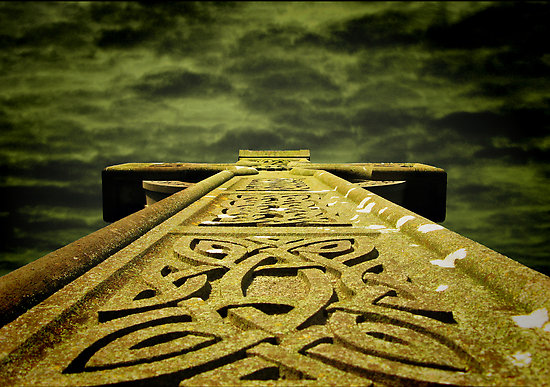
Our ecumenical baptismal creed, the Apostles Creed, states “I believe in the Holy Spirit, the holy catholic Church. . . .” The most widely used ecumenical creed, the Nicene Creed states “We believe in one holy catholic and apostolic Church.” So what does it mean to be catholic?
For the most part, when we hear someone declare “I am a catholic” or if someone uses the word catholic, our thoughts turn first to the Roman Catholic Church. However, while the Roman Catholic church is catholic, they are not the only catholics. The very term Protestant derives its meaning from that time period in the 16th century when many historic, catholic Christians were protesting some of the doctrine and a lot of the practices of the Roman Catholic church. It is important to realize that all Protestants derive their starting place from the medieval Catholic church. Men like Martin Luther and John Calvin were Roman Catholics that were forced to leave the church, and were used over time to help the Roman Church see its need of change in multiple ways. However, John Calvin and Martin Luther always subscribed to the catholicity of the creeds and the importance of those Christians and church fathers that went before them.
Unfortunately, many groups have decided in their own thinking, and in their brief history, that THEY now are the true church (as if they were starting the church from scratch). The implication is that the church before them has been getting things wrong, that they are above the corruption or blind-spots that others have had, and that they are in little need of the help offered by those Christians who have lived before them. Not only is this historically dishonest, it is thoroughly unscriptural. The reality is that the Feast of Pentecost in the first century was the beginning of the church (as recorded in Acts). The Reformation, Pilgrims landing on Plymouth Rock, Great Awakenings, Azusa Street Revival, etc., were NOT the beginning of the church. In addition, of all the informing events that may be meaningful for us, we should be open to discernment and an honest evaluation of these same events through the lenses of scripture and those who have gone before us. History teaches us (if we will listen) that hindsight is 20/20. Why do we always believe that our generation is somehow removed from this reality; that we will avoid the blind-spots that no generation has ever eluded?
All churches that name Christ as Lord today owe a great debt to the church councils and leaders that helped settle the debates and truth regarding the Trinity, the incarnation of Christ, and many more basic core doctrines that we take for granted today. In other words, our debt to those who have gone before us is pronounced whether we want to admit it or not.
So what does it mean when we declare every Sunday that we are catholic?
First of all, it means that we have an ancient faith. We, by very definition, are a people dependent on those who have come before us. We are dependent on God's work now among us, but God's work among us does not negate or lay aside the work that he has always been doing among his covenant people. From the creation of humanity to today, we owe a debt of gratitude to those who have faithfully served the Lord and handed down a living faith to our generation. If we desire the scriptural and historic honesty that the Lord requires of us, we will embrace that we build on the shoulders of those who have come before us. There is a core teaching and interpretation of Scripture that has been and is being passed down from generation to generation. It is appropriate to question what belongs in this “core” and we are still in the process as the “church universal” of taking the good and leaving the bad. However, there is that which we believe will not change from the past regarding the Gospel, the Kingdom of God, and the character of our God. This is our catholic faith, and the creeds are our starting place in any discussion of our central beliefs.
Secondly, it means that we have an apostolic faith. As Christians we read the Old Testament through apostolic “lenses;” and we are guided by the apostolic perspective, especially as recorded in the Holy Scriptures. The catholic perspective is that any authority we have as a church is derived from Jesus Christ who is the head of the church. However, we also believe that we learn of this Jesus through the perspective of the apostles who lived, listened, and walked with Him. Their teaching and their writings in the Holy Scriptures now guide and shape our thinking, being, and living. In Acts 2 we are told that the church gathered together in part to hear “the apostles’ teaching”. We believe that the truth and authority that we have today as God's faithful people is derived and handed down to us from the apostles. Outside of their Holy Spirit-led perspective, Christian truth does not exist.
Thirdly, we are a global church. Our catholicity, while derived from the Jewish people and based on the salvific work of a Palestinian Jew who was also God, has always been intended for ALL the peoples of the world. WE ARE AN INCLUSIVE FAITH. Every nation and tribe is offered the good news regarding the Messiah, Jesus Christ. The Abrahamic Covenant makes it clear that the Lord was going to bless all nations through Abraham's family. This has come to pass with the coming of Jesus Christ in obedience to His Father through the power of the Holy Spirit. Now the church is spread across the globe. There is a strength and unity that Christians gain from these global relationships, challenges, and differing perspectives. Christ's desire is that we all be one, so that the nations of the world may see our love and unity and “believe that you (the Father) have sent me (Jesus)” (John 17). Salvation is offered for every person who repents of their sin, accepts their need, and puts their hope and faith in Jesus - no matter their ethnicity, gender, or socio-economic status. With Jesus, redemption is never "bought" or manipulated by the power structures of this world.
So are we Anglicans also catholic? YES! We are local bodies of believers with our own distinct location, culture, strengths and weaknesses, and, yet, connected to the church that has "always been" through Apostolic Succession, The Holy Scriptures, The Historic Liturgy, and the Historic Creeds. We are an ancient, apostolic, and global people interconnected and dependent on those faithful believers throughout space and time. Thanks be to God!